> For the complete documentation index, see [llms.txt](https://docs.tenderize.me/llms.txt). Markdown versions of documentation pages are available by appending `.md` to page URLs; this page is available as [Markdown](https://docs.tenderize.me/introduction/tender-tokens.md).
# Tender Tokens
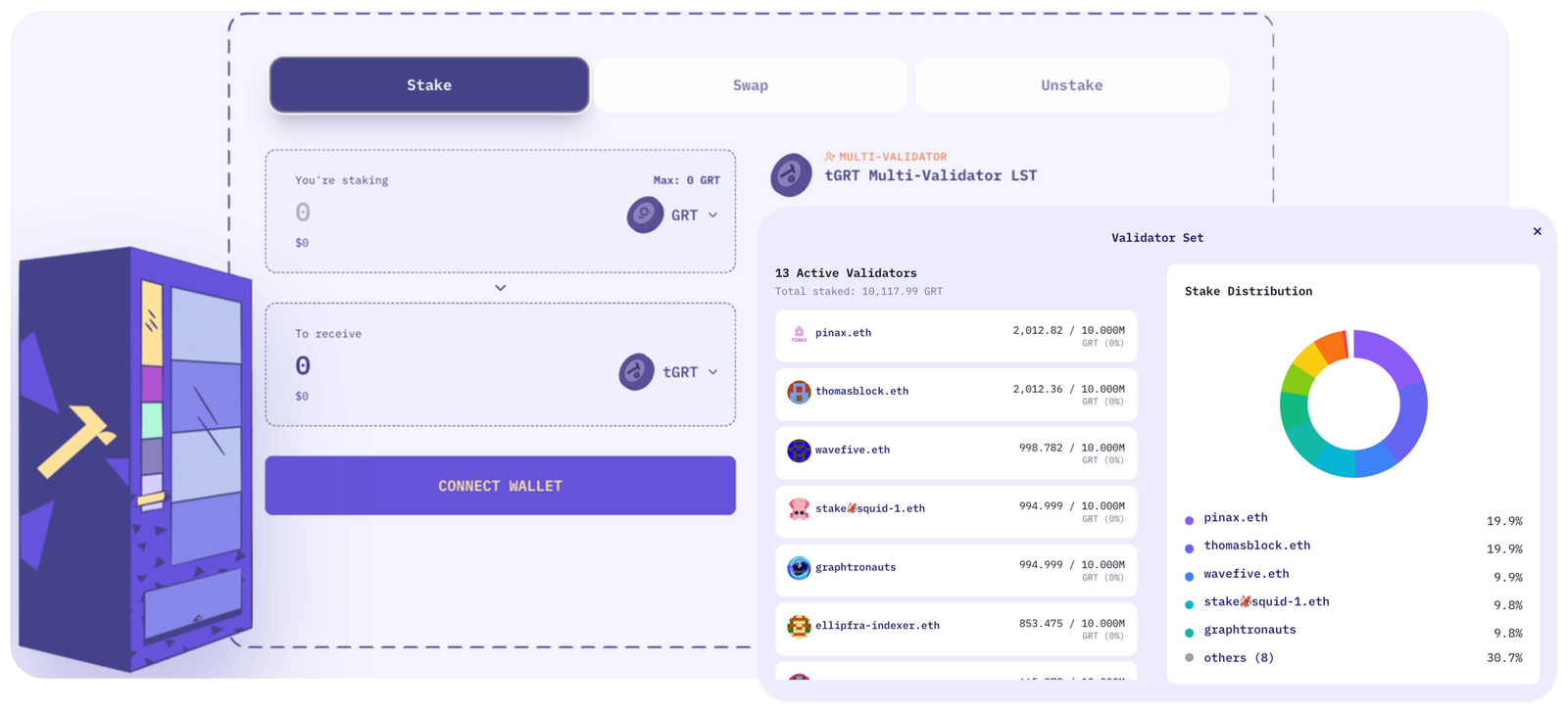
**Tender Tokens** are liquid staked tokens that automatically stake to a diverse set of high-performing validators, managed and curated by the Tenderize protocol and $WAGYU token holders. They allow users to easily stake and diversify without having to keep track of validator performance. \
\
Tender Tokens take into account network health and have rules to ensure healthy stake distribution across PoS networks. The rebalancing happens automatically on a smart contract level. New deposits are staked to the most underallocated validators, while withdrawals are processed from the most overallocated validators.
Similar to Liquid Delegations, Tender Tokens can still be unstaked regularly at no fee while waiting for the unstaking period of the underlying PoS network. But you can also instantly unstake them for a small fee. \
\
**A major difference** with liquid delegations is that Tender Tokens are **non-rebasing**, and instead use a floating exchange rate to indicate how much tokens the LST is worth (e.g. 1 tLPT = 1.20 LPT).\
\
These new LSTs are a perfect example of composability, creating a staking pool that uses various [Liquid Delegations](/introduction/liquid-delegation.md) under the hood with a set of allocation rules. Theoretically, anyone can create Tender Tokens with their own composition and rules, as the Tenderize protocol is fulle open for anyone to build on.